
River Wisdom
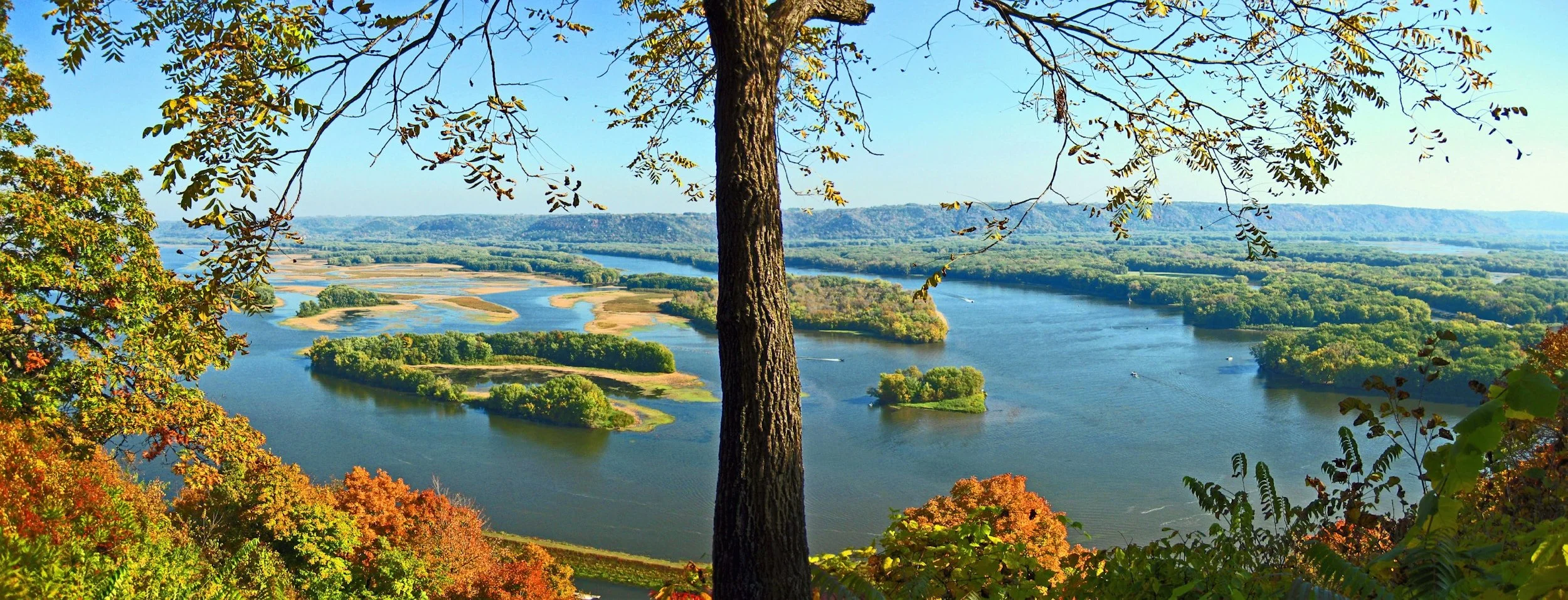
Mississippi River
This summer I made a pilgrimage. It didn’t take me to the Middle East, or Nepal, or to a picturesque monastery in Europe. Instead, it brought me to north-central Minnesota. Itaska State Park — home to the headwaters of the Mississippi River.
The reason I chose this destination in part had to do with nostalgia. I grew up in Iowa, not far from the Mississippi. It was the closest major water feature in our region and a recreational destination in warmer months. We would go boating there, camping on the sand bars, and hiking the bluffs above the river.
With a channel about two miles across (possibly as much as three) at its widest, its size was awe inspiring. I have fond memories of sitting on its banks as a boy, watching barges pass through the lock and dam system while bald eagles circled overhead.
All of this makes the Mississippi River stand out as an important landmark in my life. That alone was enough to make the headwaters a worthwhile destination. What made my trip a true pilgrimage, however, is what rivers have come to represent in my personal spirituality. To me, rivers are potent symbols of life, connection to nature, and above all, the notion of impermanence.
The River as Spiritual Symbol
I’m not the first person to ascribe spiritual significance to a river. Throughout history, rivers have been revered for both their life-giving qualities and their destructive potential. For instance, the Nile River represented life and death in ancient Egyptian religion, where the god Hapi personified annual floods and was a primary deity of fertility. In India, the Ganges River has long been sacred to the Hindu religion and is embodied by the goddess Ganga. Her waters are believed to purify and bring blessings. In Christianity, the Jordan River in Israel is remembered as the place where Jesus was baptized, an act that represents the process of being washed of sins and born anew.
The Mississippi River is also revered, particularly by indigenous peoples such as the Ojibwe, Ho-Chunk, and Dakota. The place where the Mississippi and Minnesota rivers meet is known to the Dakota as Bdote, meaning “where two waters come together,” and has been a sacred site for thousands of years. The name Mississippi itself derives from the Ojibwe Michi Sepe, translated as “mighty river” or sometimes “father of waters.”
It’s worth noting that many indigenous traditions are fundamentally “animistic,” meaning they see animals, plants, and other aspects of the natural world as having spirits and possessing a kind of sentience.
“The rivers are our brothers. They quench our thirst. They carry our canoes and feed our children. So you must give the rivers the kindness that you would give any brother.” — attributed to Chief Seattle
According to this worldview, a body of water like the Mississippi is not just a geological feature. It’s alive. And if the Mississippi is a living thing, then the headwaters is the place where he is born.
Here, the Father of Waters is no more than a gentle stream maybe fifteen feet wide and no more than a few feet deep. He is just beginning a life that will touch ten states, swelling as he’s joined by thousands of tributaries along the way. By the time he reaches the ocean, he will have grown into a giant who dumps 600,000 cubic feet of water per second into the Gulf of Mexico.
That’s quite a transformation. It’s exactly this dynamic quality that makes rivers the perfect embodiment of a spiritual principle found in the natural world that we might call “flow.”
The Principle of Flow
These days the term “flow” is likely most familiar to people in the context of positive psychology, where it is shorthand for the idea of being in a “flow state.” It essentially means being “in the zone,” or fully immersed in the present activity. That’s not quite what I’m referring to here.
The kind of flow I’m talking about has to do with being in harmony with an ever-changing world.
Nothing in nature is static. Seasons are cyclical, as are the movements of the moon, sun, and stars. Clouds pass across the sky. Weather patterns shift. Every creature has a life span. For humans, it lasts roughly seventy years on average. For mayflies, it is less than twenty-four hours, while Greenland sharks can live 500 years. Some trees have been known to have a lifespan of 5,000 years or more, yet they are not immortal. They start as saplings and grow, year after year, adding rings to their trunk as they go, but eventually even the mightiest die and decay.
The earth itself changes. We look out over landscapes that seem timeless by human standards, but it isn’t so. The Grand Canyon was not plopped down fully formed into the Colorado River basin. It was carved by surging waters and geological processes over a span of eons. Even the mountains have lifetimes, formed by tectonic or volcanic activity, eroded by wind and rain.
What about the universe itself? According to physicists, it is expanding. The moon is moving away from the Earth at approximately 3.8 cm per year. Our sun is about midlife for a star, and will eventually go the way of a red giant, dying in roughly five billion years.
My point, of course, is that nothing lasts forever. Nothing. Like the river, time flows ceaselessly on and the world flows with it. We can either accept this reality or waste time and energy fighting it.
I’m reminded of a Taoist story from the ancient Chinese writings of Chuang Tzu. A man is found in the churning waters at the base of a high waterfall. Bystanders rush to save him, but when they catch up to the man downstream they find him very much alive, happy and unphased. Marveling, they ask him how he managed not to drown. He replied that he basically went limp and let the water carry him.
“I enter and go down with the water in the very center of its whirl, and come up again with it when it whirls the other way. I follow the way of the water, and do nothing contrary to it of myself.” - writings of Chuang Tzu
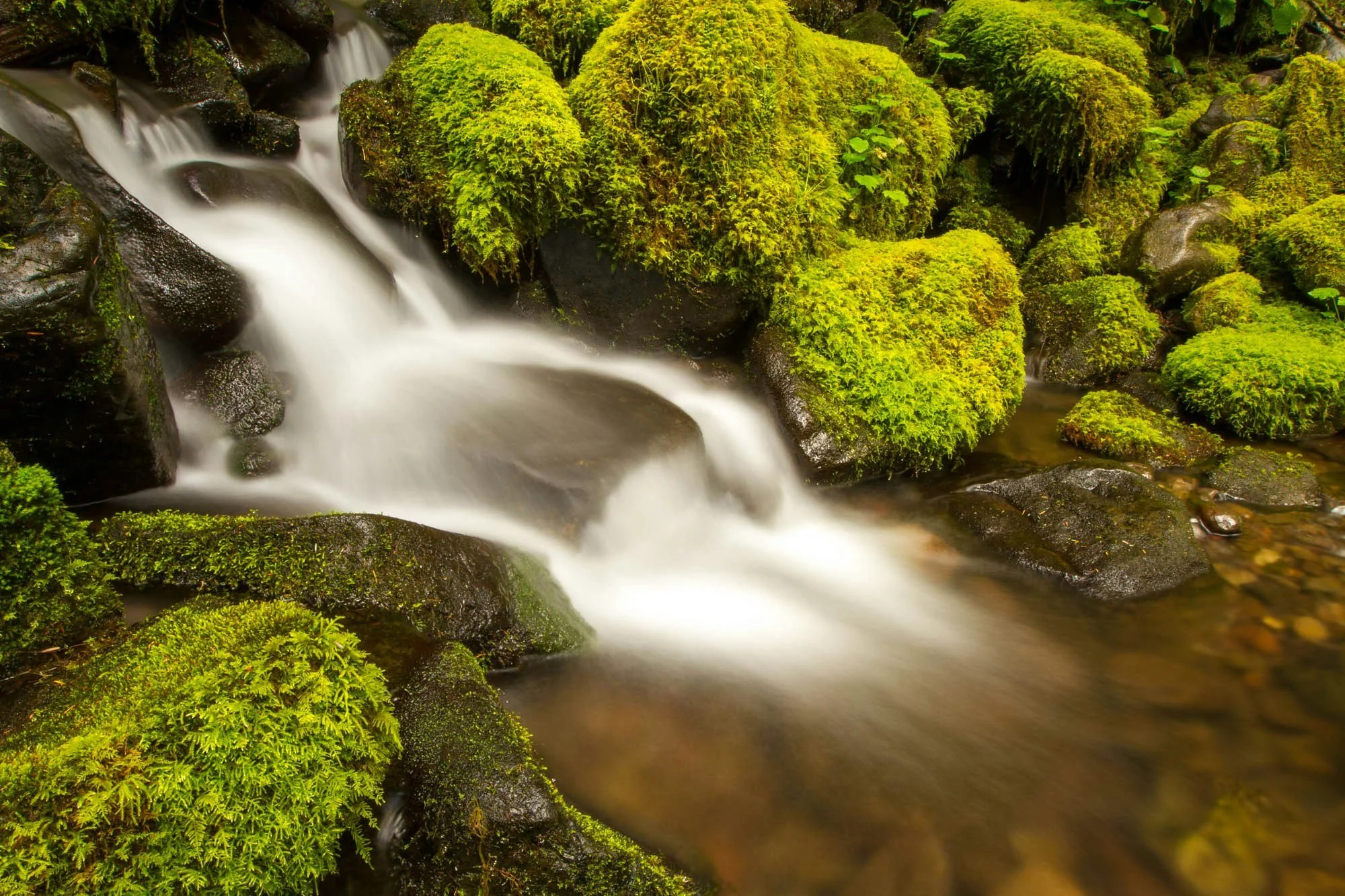
This is Taoism in a nutshell, a way of being in the world that emphasizes “going with the flow.” Though famously indefinable, the Tao is described as the ever-flowing path of the universe. A wise person doesn’t fight against the Tao but aligns herself with it. That’s why Taoism places emphasis on the importance of not forcing things, an idea summarized by the concept of wu wei, meaning “effortless action.”
It’s a far cry from a modern ethic that emphasizes doing, striving, achieving, and dominating. Our culture glorifies the accumulation of material wealth. It worships youth and beauty. We cling to these things as if terrified of admitting that they are all dust in the wind.
But the truth is, these bodies of ours are temporary. Our relationships are temporary. Though accepting this reality may seem like a recipe for nihilism and despair, the reality is that life is precious in part because we have it in limited quantity. Every moment we have with loved ones is a unique gift and should be appreciated as such. Then, when it’s gone, we must find a way to let it go.
As a recent divorcee in my mid-forties, I struggle with this as much as anyone. I’ve lost plenty of people I love, and endings are always painful. So is aging. It’s hard to watch my twenties and thirties fade ever more distantly into the rearview mirror.
Fighting against the current is no solution, however. It’s a recipe for more suffering, not less. In fact, being in denial of our mortality means we often end up taking our lives for granted. We let the years slip away from us. We are preoccupied with the past, or fixated on the future in a way that prevents us from fully living in this moment. This, and not the passage of time, is the true tragedy.
Making peace with impermanence, being in the moment, letting go, living in harmony with the world around us — these are some of the most profound lessons that nature has to offer us. This is the Way of Flow, and the rolling river is among its greatest teachers.
Thus, my pilgrimage. Who better to learn from than the Father of Waters, and where better to learn than at his source?
At the Headwaters
I wasn’t alone at the headwaters, as it turned out. Itaska State Park is quite popular as a tourist destination. When I arrived there on a sunny Saturday morning there were already roughly a dozen people splashing about.
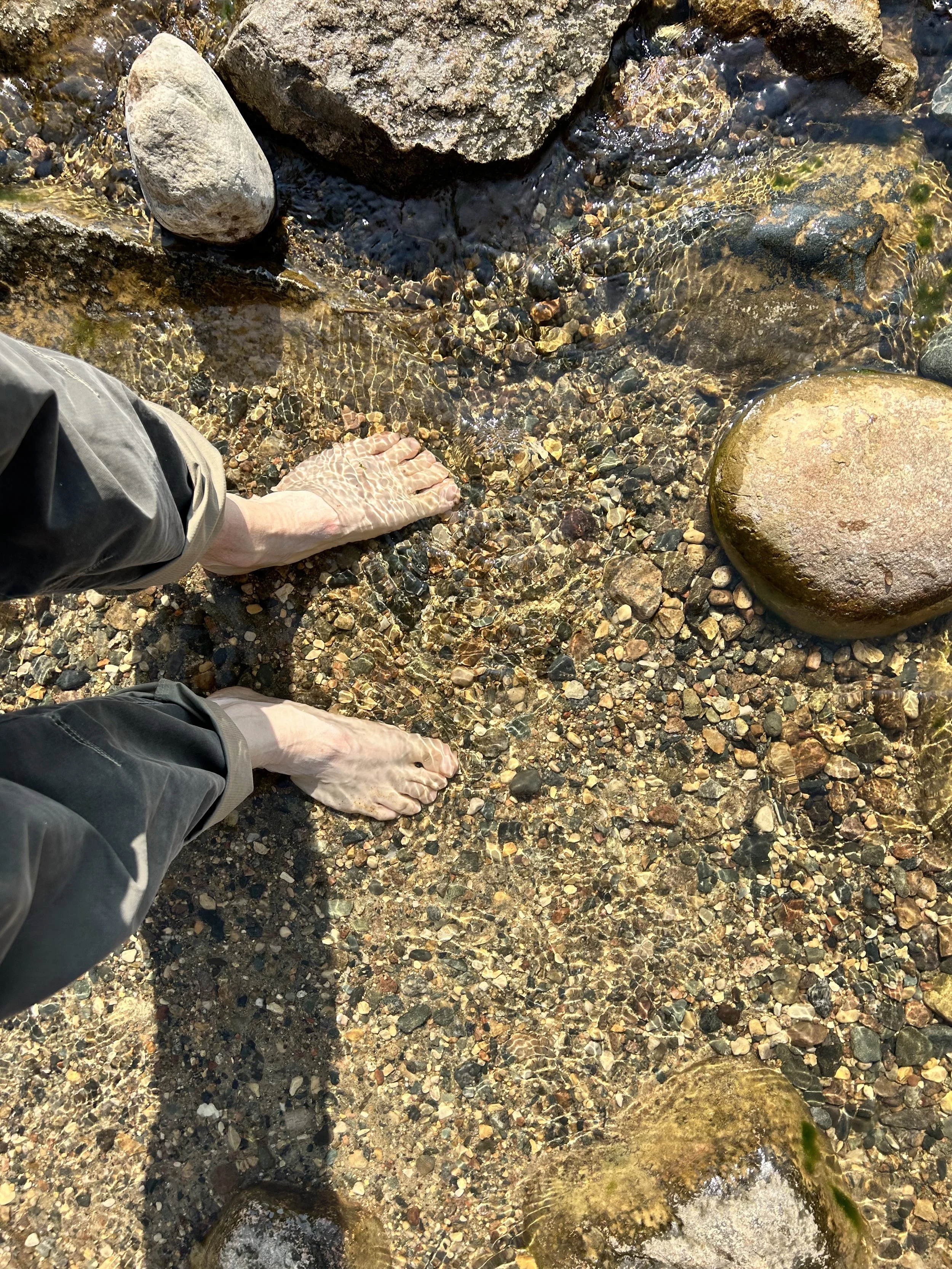
I peeled off my socks and shoes and set them under a nearby tree, then limped over jagged gravel to reach the smooth stones at the water’s edge. Stepping in, I stood shin-deep in the cool water. I had come for quiet contemplation, to bask in the park’s natural beauty and meditate.
I had not come for crowds. Irritated by the noise and bustle of other tourists, I closed my eyes, imagining what the place would have been like before colonization, back when the land was wild and unspoiled. At some point, I realized that this, too, was a kind of clinging to the past — water under the bridge, as the saying goes. I sighed and told myself to let the thought go. Let it be carried downstream. Just be in the moment.
Sure, on that particular Saturday morning, the river was full of people applying sunscreen and splashing in the water, but a thousand years in the future, or a ten thousand — who knew? Perhaps the place would be untouched wilderness again. Or perhaps the Mississippi would have dried up, leaving a vast desert in the middle of the continent. Nothing lasts forever, after all.
All I could be sure of was that the flowing path of the universe had placed me there, on a lovely day, in a perfect spot to experience the beauty of nature — a perfect spot to feel the water roll by and appreciate my precious, fleeting life.