
The Hostile Wilderness
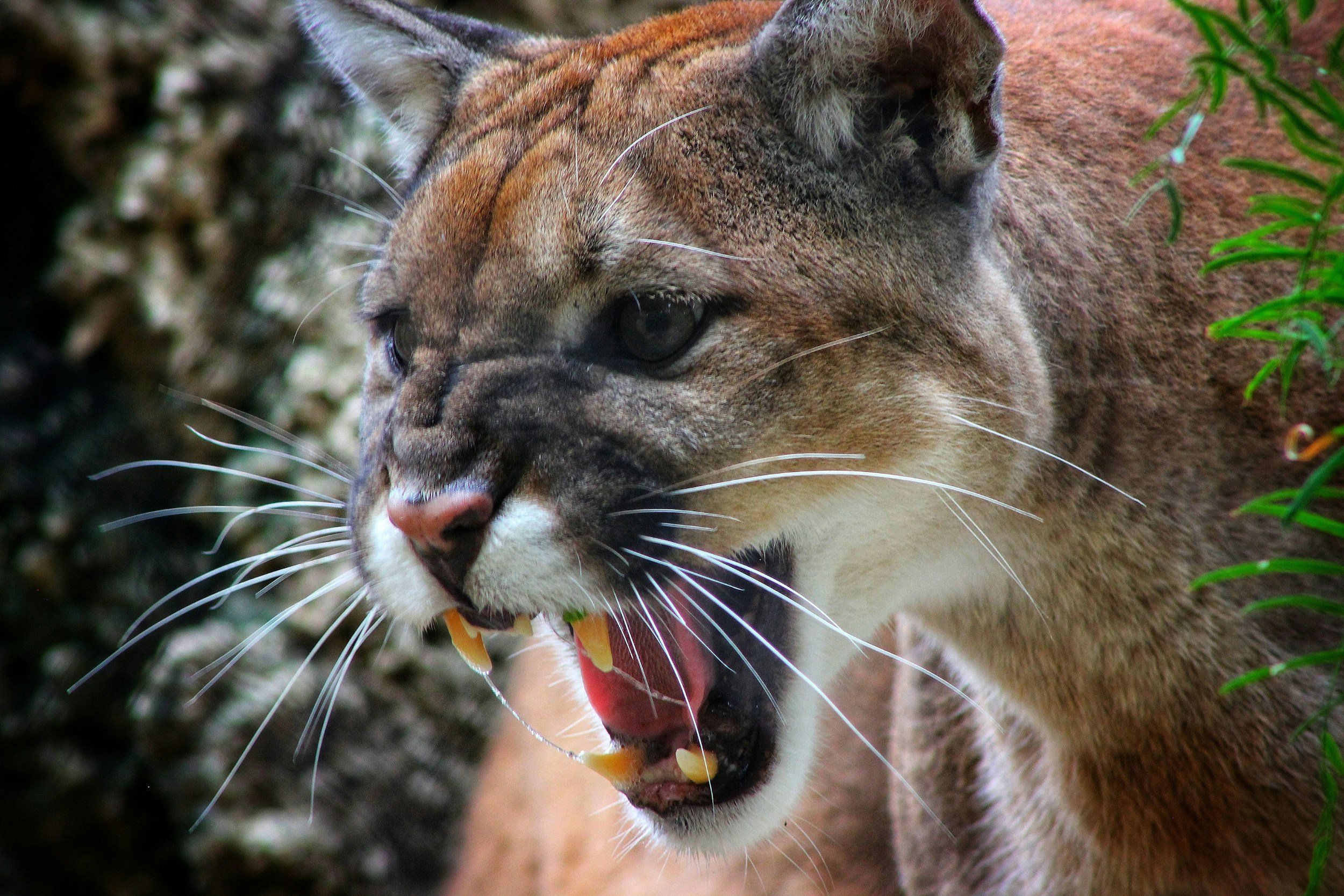
There’s nothing like a deep, dark forest to bring up primordial fears. A part of our brain that formed somewhere way back in our evolutionary past still remembers the old dangers — beasties with sharp claws and fangs, poisonous plants, stinging insects, harsh weather, falling rocks, and rushing rivers.
When we step into the wilderness, we sense things watching us. We know it in our bones. There are forces beyond our control, and in a world where we’ve engineered everything to be safe, convenient, and predictable, this can be a deeply unsettling experience.
Which is precisely what makes it so valuable. We’ve forgotten our place in the world, and interaction with the wild can help us to find it again.
Civilization vs Wilderness
The tension between the “civilized” world of humans and the untamed wilderness isn’t new. It’s been around since the dawn of civilization, in fact.
Some of the oldest known creation myths, such as the Babylonian Enuma Elish, the Vedas of India, the Book of Genesis in the Hebrew Bible, and the Greek tales of Hesiod’s Theogony, describe divine beings subduing wild, natural forces to bring order out of chaos. In the Epic of Gilgamesh, Gilgamesh himself represented the “civilized” human while his friend and sometimes rival, Enkidu, represented the “wild” man who needed to be tamed.
In ancient Greece, the polis, or city-state, represented rationality and order, in contrast to the wildlands beyond the walls, which were characterized by chaos and danger. In both the Greek and Roman cultures, wilderness was often seen as a place of barbarism, and after the arrival of Christianity, it also became associated with paganism and heathenism. It’s no coincidence that Pan, the Greek god of wild places, and his Roman counterpart, Faunus, became the visual template for the Christian devil — from their horned heads right down to their goat-hooved feet.
So while the idea of the “hostile wilderness” isn’t unique to modern times, our quest to subdue nature has reached unprecedented levels. Starting with the Enlightenment and accelerating through the Industrial Revolution until today, we’ve approached the natural world as a foe to be conquered and looted. And as our technology has advanced, we’ve done so with increasing efficiency and ruthlessness.
Obviously, this has had a devastating impact on the environment. But it has also caused a widening rift between our species and the other inhabitants of this planet.
Biophobia
Today, we’re estranged from the natural world in a way that would have been unfathomable for citizens of ancient Babylon or Athens. We no longer need to hunt or harvest our own food. We don’t need to journey by foot or horseback to get places. We aren’t dependent on seasonal patterns, moon cycles, and weather conditions in the same way our ancestors were.
Roughly 80% of people in the United States live in an urban environment, and the majority of us spend less than one hour outside every day. We are, increasingly, a nature-averse society.
In recent years, scientists have noted an increase in what they call “biophobia.” It is the inverse of biophilia, a term derived from Greek bio- (life) and -philia(love/fondness), which was first used by biologist E.O. Wilson to describe our innate need to connect with nature.
Biophobia, on the other hand, is characterized by negative feelings toward nature. We fear what we don’t understand, as the saying goes, and most of us have very little intimate knowledge of wild places.
This creates a kind of negative feedback loop. Discomfort with nature keeps people from spending time outdoors, which in turn leads to more estrangement from nature, which leads to more biophobia, which leads to less time outdoors.
So how do we find our way out of this destructive pattern? It starts with facing our fears.
Real Benefits and Real Dangers
Outdoor enthusiasts and nature-lovers tend to romanticize wild places. We talk about their healing properties while emphasizing the beauty, peace, and harmony to be found in the natural world. And none of this is wrong.
To be sure, a growing body of research shows that exposure to nature is good for us, both physically and mentally. It can help ward against depression, anxiety, and chronic disease, while offering benefits for cognitive function, blood pressure, sleep, and overall mental health. Wilderness can indeed be a place of balance and a certain kind of harmony, and much peace can be found in the forests and mountains.
But nature doesn’t exist primarily for our enjoyment or our healing. It’s not just a backdrop for pretty photos. It’s home to countless creatures that are living, growing, scavenging, mating, raising young, hunting — doing all the things they must to survive every day. And much of this scramble is decidedly not peaceful.
The wild is a place of balance, and that balance often involves violence.
In the wilderness, there are any number of things that can harm you. Weather conditions can be harsh. Floods and landslides pose real hazards. Food and water may be a struggle to locate. You could become prey, especially if you are injured and alone, and there are any number of scavengers and opportunistic organisms happy to pick you apart if you dropped dead in the wild.
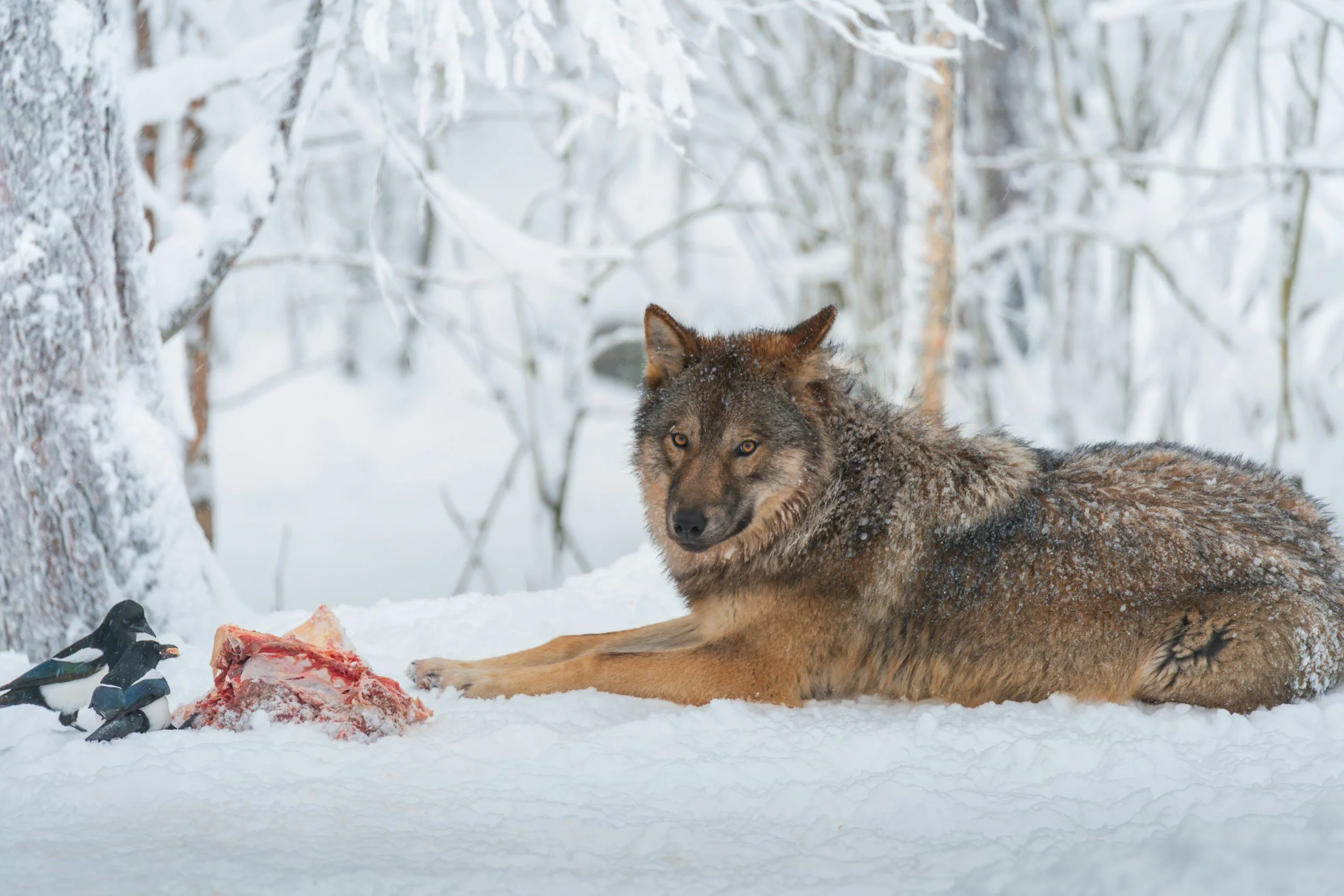
Does this mean wilderness is a chaotic orgy of death and mayhem? Not at all. Far from it, in fact. Wild ecosystems almost always have complex, delicately balanced orders. Order doesn’t necessarily mean kindness or mercy, but it does entail mutual dependence between the creatures who live there. Part of being in right relation with the land is respecting its hazards and maintaining good boundaries.
Here’s the crucial thing to understand — just because nature can be harsh, that doesn’t mean it’s our enemy. It isn’t malicious. It bears no personal animosity toward us. In fact, speaking of nature as an adversary misses the basic fact that we are nature. We’re part of it — part of the web of life. Within that web, everything is subject to the cycle of birth and death, from the largest beast to the smallest organism. Even big-brained hominids like us.
If you were to die in the wild, there would be no waste. Every bit of you would be scavenged and reused for the perpetuation of other lives. Even what little bit that makes it into the ground would become nutrients for plant life.
Sometimes you receive the gift of sustenance and life from others, and sometimes you are the giver. This is the contract that binds us together. Perhaps that is little comfort to you, but there is a certain kind of beauty in it.
What if we approached nature not as a villain to be conquered and subdued, but as a teacher, one that can help us remember our place in the world? Maybe it could remind us of the connections we’ve lost and teach us how to honor our limitations.
Maybe we could learn what it means to be fully human again.