
Our Name and Logo
Northlandr’s name and logo are a nod to the fact that we are based out of the state of Minnesota in the northern region of the United States.
Our goal is to foster healthy connection with this place – not just to be on the land, or to take from the land, but to be of this land. To be custodians and protectors. To live as a keystone species here.
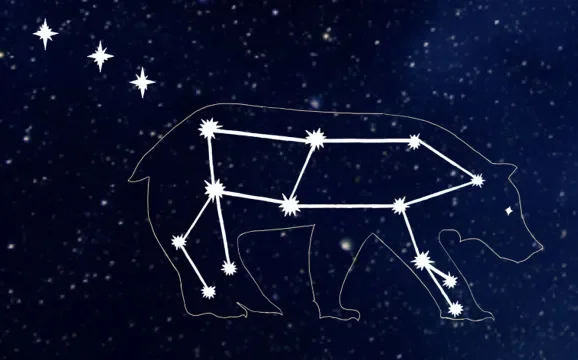
The logo is Ursa Major – “the great bear,” a constellation primarily associated with the northern hemisphere. Bears have a particular connection to the North. In fact, the word arctic literally means “bear country.”
Reverence for bears in this part of the world goes back a very long way. In his influential book The Masks of God: Primitive Mythology, Joseph Campbell theorized that there was a Paleolithic circumpolar bear cult, a theory supported by the fact that forms of bear ceremonialism are found throughout the northern regions of Eurasia and North America.
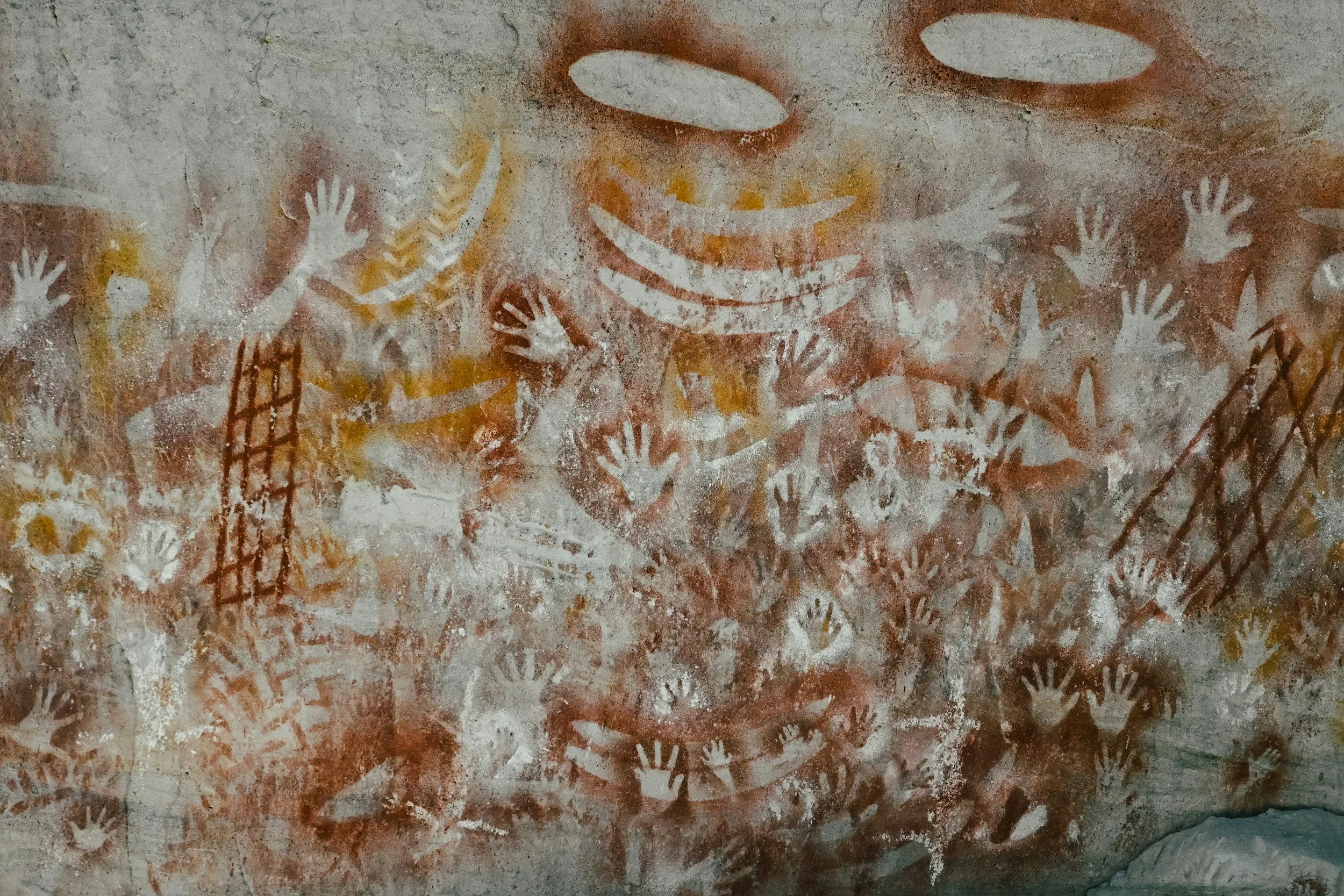
It has been suggested, in fact, that bears are connected to many early forms of art and spiritual practice.
The oldest musical instrument ever discovered is made from the femur of a bear, and humans may have been inspired to first create cave paintings by observing the scratches bears left on cave walls.
E.C. Krupp is the world’s leading authority on “archaeoastronomy,” the study of how ancient peoples venerated the skies. Krupp, like Joseph Campbell, points to bears as the inspiration for early shamanistic practices. One of the most distinctive aspects of the shaman’s role was to act as a bridge between the human world and the spirit world, and they did this in part through symbolic dying and rising again in the form of trance. In his book Echoes of the Ancient Skies, Krupp points to the very act of hibernation as the thing that makes bears so spiritually significant.
“Throughout the northern world the bear is an important image in the shamanic tradition, and it is fairly easy to see why this might be so. As a powerful creature, the bear is a natural embodiment of the shaman’s power, but the bear shares another aspect of the shaman’s path. In winter, the bear hibernates. It emerges in spring. Hibernation is a kind of death, and it parallels the shaman’s ‘death’ – the obligatory trance. Through this transformation the shaman experiences a transcendental ecstasy associated with the sky. He is reborn, as is the bear when winter’s death is done. Power and the cosmic cycle are locked in the habits of the bear.” (Krupp, p.140)
Bears are the prototype for the dying and rising being, and while today we still associate Spring with bears coming out of hibernation, in the ancient understanding the causal arrow may have been reversed. It wasn’t that bears woke up because Spring arrived and things thawed out. Instead, bears came out of hibernation and brought new life with them. They made Spring happen.
As a symbol of the North, natural cycles, and the spiritual bridge between worlds, the Great Bear captures the essence of what Northlandr is all about.