
The Subversive Mulberry
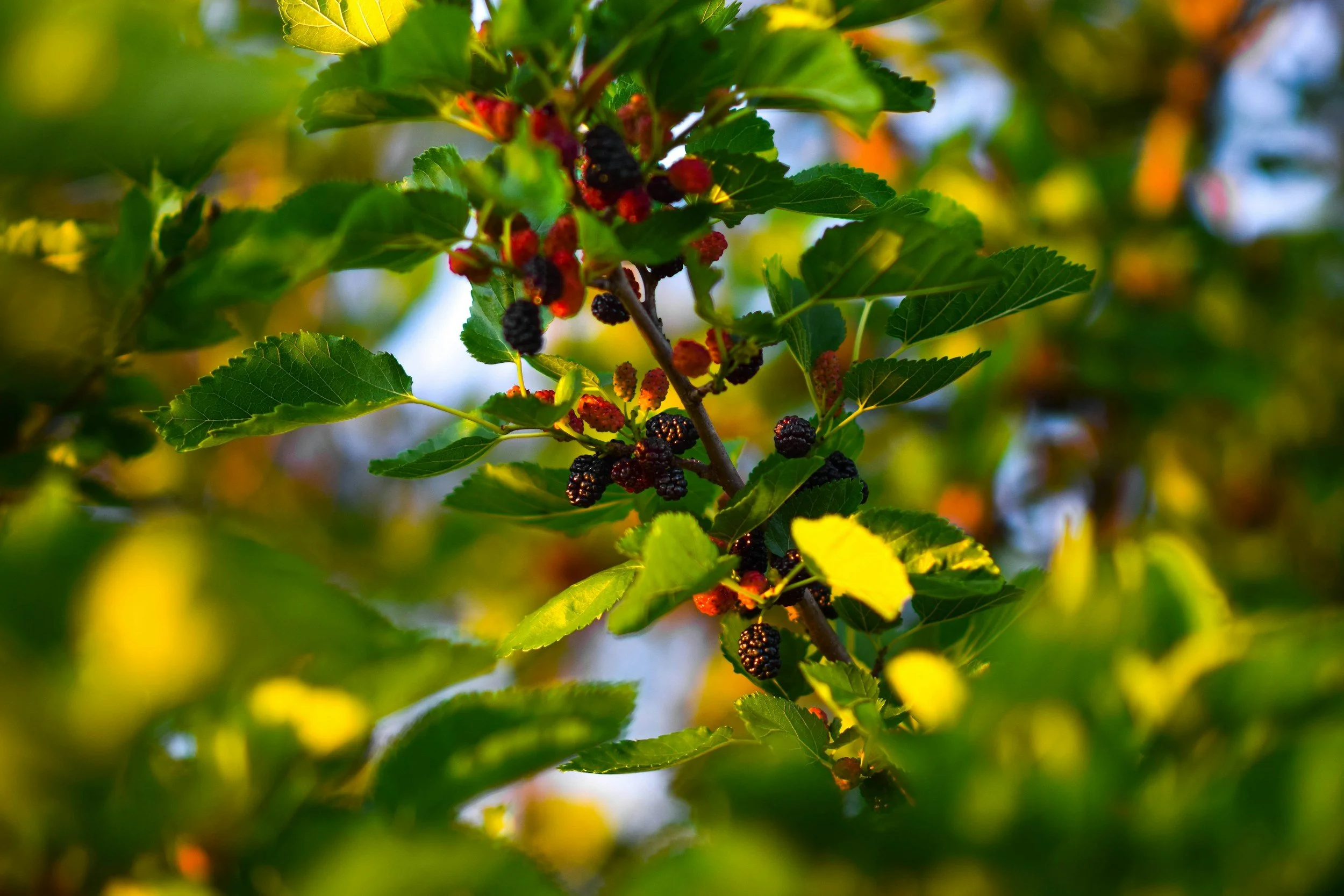
The other day I was walking from my car into my office building when I noticed a small tree sprouting from the crevice between the parking garage and a chain-link fence. I recognized the distinctive yellow-orange trunk immediately. Years ago, right after college, I spent some time working for a residential tree care service and my boss had drilled the identification into me. It was the infernal mulberry.
My boss had explained that a mulberry was more weed than tree. It seemed to grow just about anywhere — right beside houses, in gardens, along driveways, in fence rows. Give it a thimble-full of dirt and a bit of sunlight and it would take hold.
And it grew fast. If you missed it when it was a sapling, the next time you came back it could be a tree with a trunk that was a couple inches in diameter, and much harder to remove.
If you were unlucky enough to have a mulberry on your property that lived to maturity? Get ready for a mess. Its berries would fall everywhere, staining things, attracting animals, and spreading new mulberries. That’s why these “trash” trees were to be killed on sight — hacked down, torn up, whatever it took.
This was the company line, and it was reinforced at every opportunity.
Later, when I acquired a yard of my own, I came to understand the truth behind this policy. Or partial truth. Mulberries are, indeed, prolific growers. They can take over a fence line fairly quick, and their berries sometimes make a mess.
But these tough trees are far from being “trash.” Their fruit offers color to the landscape and nourishment to all sorts of creatures, from insects and birds to raccoons. While the berries aren’t necessarily the sweetest out there, they are still tasty and full of nutrients. In addition to eating them raw, people have used them in jams and pies, as well as other baked goods. Mulberry leaves are edible, too. They can be used in salads, herbal teas, and tinctures.
This wild tree is a wonderful example of how generous the earth can be without any help from us. But this independent nature also explains why they can be so demonized in the modern world. We don’t control them.
This gets to the heart of why we disparage some species as “weeds.” What separates a weed from any other plant? It’s not that they lack medicinal, nutritional, or aesthetic value. Take the common dandelion, for instance. It has a lovely yellow blossom. Its flowers and greens are entirely edible. And yet, despite these positive characteristics, homeowners purchase herbicides or hire lawn specialists to rid their properties of “impurities” like dandelions so they can have a smooth, boring, monoculture yard.
Here’s another, even more controversial example: garlic mustard. This plant spreads quickly and has the unfortunate effect of crowding out native vegetation, which is why we condemn them as “invasive” and curse their existence. We act as if it’s their fault that they were intentionally brought here by European settlers. But here’s the thing — settlers loved them for a reason. Garlic mustard is tasty, and even more nutritionally dense than more familiar greens like romaine lettuce, spinach, and kale.
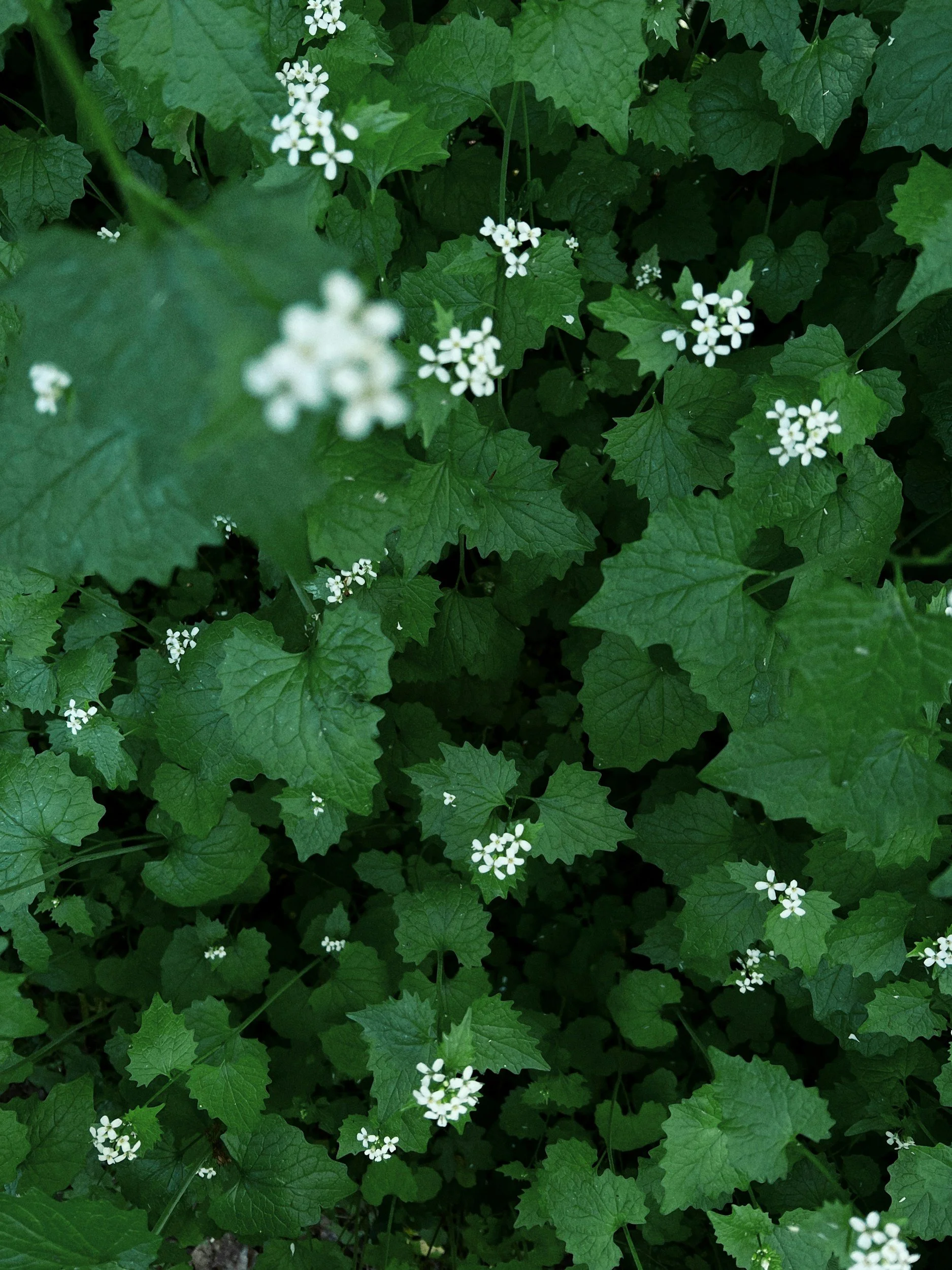
Our attitudes about plants like dandelion and garlic mustard reveal something fundamental about our relationship with the natural world. We have a need to be in charge. To dominate. Weeds, on the other hand, grow on their terms, not ours. They are wild. They are free.
The value of so-called “weeds” like the mulberry is precisely the fact that they rebel against the meticulous gardeners and the urban planners who insist on symmetry, pure pedigree, and linear composition.
Mulberries are anarchists. Even their leaves defy uniformity. In fact, the only consistent thing about a mulberry’s leaves is the inconsistency. They vary not only from tree to tree, but from branch to branch. Two leaves right next to each other can be markedly different in shape and size. This makes them challenging to identify by foliage alone.
With mulberries, their very presence is subversive, undermining the carefully curated spaces of domestic living. Like the one growing beside my parking garage, for instance. It shows up uninvited, in the middle of a city, bringing forest along with it. The land can’t be controlled, it seems to say, at least not forever.
This insistence on ignoring the imaginary boundary between city and wilderness can teach us something important. Nature is all around us, even in the most urban areas.
We aren’t separate from nature, it’s not something out there. We are nature, in fact. Recognizing that fact is a crucial step in building a healthier relationship with the land, and our weedy friends can be excellent models. They know how to stay grounded, and how to thrive in the toxic soil of today’s modern world.
So now, when I see a mulberry tree growing, especially within city limits, I cheer for it rather than cursing it out. It’s doing more to re-wild the earth than most of us ever will.
If civilization were to end tomorrow, it wouldn’t take long for vegetation to take over the streets and high-rises. And it would be anarchists like mulberry and garlic mustard leading the charge.
This is what I say to all the people escaping to the forest on the weekends for a break from the city: be kind to the forest. Leave no trace, but when you return bring nature back with you. I’m not talking about a sack full of pinecones. I mean the awareness of nature, the mindset. I’m talking about the mulberry mentality that drives you to infiltrate the domesticated world and create something messy and wild. We need more of that if we want to create a healthier, more sustainable future.
Originally published in The New Outdoors